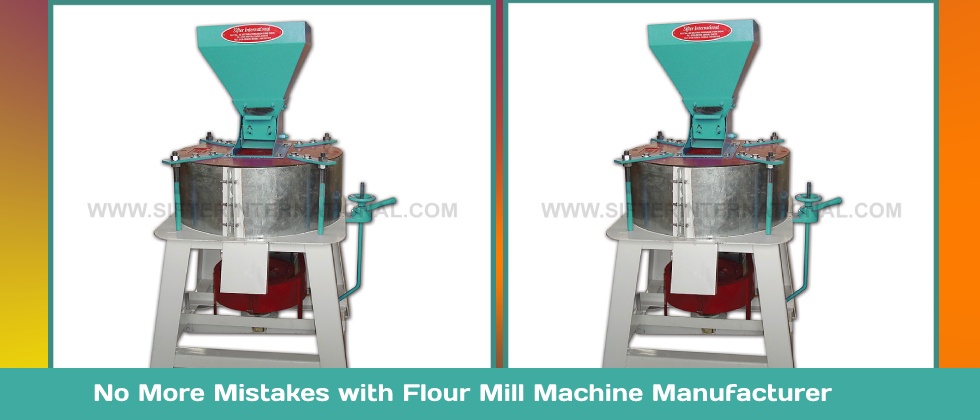
No More Mistakes with Flour Mill Machine Manufacturer
Mar 11 2023
1.png)

In today's digitized financial ecosystem, Automated Teller Machines (ATMs) remain a critical point of service for customers—and a high-value target for cybercriminals. Despite advances in security technology, ATM networks continue to be vulnerable to a variety of attacks, including jackpotting, malware injection, man-in-the-middle (MitM) exploits, and rogue device communications. These attacks often evade traditional endpoint and firewall protections, making Network Detection and Response an essential layer in modern ATM security strategies.
In this blog, we’ll explore how NDR helps financial institutions prevent ATM network attacks through real-time monitoring, anomaly detection, and rapid incident response.
ATM networks are typically composed of thousands of endpoints (the ATMs themselves) connected to core banking systems via a mix of secure and semi-secure network links. The primary threats to ATM networks include:
Malware-based attacks (e.g., Ploutus, Cutlet Maker): Cybercriminals inject malware into ATM systems via USB ports, network connections, or remote access to force machines to dispense cash.
Jackpotting: Attackers physically or remotely manipulate ATMs to "jackpot," or dispense all their cash.
Network spoofing and MitM attacks: Attackers intercept or manipulate communication between ATMs and banking servers to steal credentials, harvest card data, or modify transactions.
Insider threats: Employees with network access can introduce malicious software or exfiltrate sensitive ATM data.
Rogue ATM deployments: Fake ATMs can be deployed in high-traffic areas to harvest card data and PINs.
Each of these attack vectors involves network-level behaviors that, if properly monitored and analyzed, can be detected and mitigated early.
Legacy ATM security is often reactive, relying on antivirus tools, firewalls, and system hardening. These defenses:
Struggle with zero-day malware and fileless attacks
Lack deep packet inspection and east-west traffic visibility
Fail to correlate low-and-slow attacks across dispersed endpoints
Have limited forensic capability after an attack has occurred
That’s where NDR steps in as a proactive defense mechanism.
NDR solutions continuously monitor all traffic—north-south and east-west—across ATM endpoints, branches, data centers, and the wider network. By collecting and analyzing metadata such as NetFlow, packet captures, and session-level data, NDR builds a real-time picture of normal vs. abnormal behavior.
Use case: An ATM in Mumbai suddenly starts communicating with an unknown IP address in Eastern Europe. An NDR platform flags this as an anomaly and sends an alert to the SOC.
NDR platforms use machine learning to establish baselines for normal ATM behavior, such as expected traffic volumes, destinations, ports, and protocols. When deviations occur—like unusual login times, high-frequency cash requests, or use of non-standard encryption—NDR detects and prioritizes them for investigation.
Use case: A malware-infected ATM begins using DNS tunneling to exfiltrate transaction data. NDR detects the irregular DNS query pattern and blocks further communications.
Once a single ATM is compromised, attackers often try to move laterally to other ATMs or backend servers. NDR detects these movements—often invisible to endpoint security—and can automatically trigger responses.
Use case: An attacker attempts to pivot from one ATM node to others using stolen credentials. NDR detects unauthorized lateral movement and cuts off the connection.
By maintaining an inventory of authorized devices and monitoring network communication patterns, NDR can flag rogue ATMs or unauthorized network devices attempting to join the ATM network.
Use case: A spoofed ATM is deployed near a mall and starts communicating with the bank’s backend servers. NDR identifies the new MAC address, unusual connection source, and protocol mismatch—shutting it down before customer data is stolen.
Modern NDR solutions integrate with global threat intelligence feeds and internal SOC tools, correlating traffic with known Indicators of Compromise (IOCs) such as IPs, domains, and file hashes.
Use case: A threat feed flags new C2 domains associated with a jackpotting campaign. The NDR engine checks ATM network logs and finds one machine connected to that domain two days ago—providing crucial early detection.
Once a threat is confirmed, NDR platforms can trigger automated responses such as:
Quarantining ATM endpoints
Blocking C2 channels
Alerting security teams with rich forensic context
Generating timeline visualizations of attack progression
This reduces Mean Time to Detect (MTTD) and Mean Time to Respond (MTTR), which are critical in minimizing financial loss and reputational damage.
For maximum effectiveness, NDR should integrate with other layers of defense:
SIEM: To provide long-term analytics and correlation
SOAR: For automated playbook execution
Endpoint Detection and Response (EDR): To extend visibility to the ATM’s operating system
Firewall and NAC tools: To isolate threats at the network edge
Together, these integrations ensure ATM threats are detected early and responded to swiftly.
ATM networks are no longer isolated, single-purpose systems. They are part of a broader digital banking ecosystem—and as such, must be defended with equally sophisticated tools. NDR brings the visibility, intelligence, and speed needed to combat modern threats targeting ATMs.
By proactively monitoring traffic, detecting anomalies, and triggering fast responses, NDR transforms ATM cybersecurity from a reactive posture to an adaptive, resilient defense.
Next Steps for Financial Institutions:
Conduct a gap assessment of ATM network monitoring capabilities
Deploy NDR sensors at critical network chokepoints
Integrate NDR with existing SIEM and SOAR tools
Train SOC teams to use NDR alerts for rapid triage
As the threat landscape continues to evolve, so must the defenses. NDR ensures that ATM networks stay one step ahead of attackers—secure, available, and trusted.

Social Media Marketing Strategies for Beginners
Mar 14 2023

_(1)_(2).png)

.jpg)

(0) Comments