No More Mistakes with Flour Mill Machine Manufacturer
Mar 11 2023

Selling medical devices in Spain requires more than identifying a suitable manufacturer. Healthcare suppliers must understand European regulations and national commercialisation requirements.
The Medical Device Regulation (MDR) establishes the European framework for device safety and conformity. Spain also operates RECOPS, a national system for recording economic operators and products marketed within its territory.
For hospitals, importers and distributors, understanding these requirements supports better purchasing decisions. This guide explains the relationship between RECOPS, EUDAMED and medical device traceability.
Regulation (EU) 2017/745 governs medical devices placed on the European Union market. It establishes requirements for manufacturers, importers, authorised representatives and distributors.
Manufacturers must demonstrate that their devices meet applicable safety and performance requirements. Depending on device classification, this involves conformity assessment, technical documentation and clinical evaluation.
When searching for an MDR certified Manufacturer Spain, buyers should examine device-specific conformity evidence. The term does not represent one universal certificate covering every product.
The Spanish Agency of Medicines and Medical Devices (AEMPS) oversees medical device regulation in Spain. It manages national registration and commercialisation procedures, alongside relevant market surveillance responsibilities.
Its guidance helps manufacturers and economic operators understand their obligations. Spanish buyers should consult AEMPS information when assessing products and suppliers.
RECOPS is Spain's electronic Register of Medical Device Commercialisation. AEMPS introduced the system on 15 June 2026.
It records economic operators marketing non-custom-made medical devices and in-vitro diagnostic devices in Spain. It also records the products they commercialise.
Economic operators within its scope must register and communicate the relevant product information. This supports national visibility and traceability.
RECOPS uses product information from EUDAMED. Once a device is notified and visible in EUDAMED, the operator can communicate its commercialisation through RECOPS.
The submission includes the applicable UDI-DI, commercialisation start date, product labelling and instructions for use.
These details help AEMPS identify products available in the Spanish market. They also support more accurate regulatory records.
RECOPS does not replace EUDAMED. Both systems serve different purposes within the European and Spanish regulatory framework.
EUDAMED supports European-level registration and medical device transparency. RECOPS records the relevant commercialisation activities and products in Spain.
For products notified in EUDAMED from 28 May 2026, RECOPS communication is required before commercialisation in Spain, once the product becomes visible.
Certain earlier devices follow transitional arrangements. AEMPS provides specific timelines depending on notification dates and previous market activity.
Manufacturers must meet applicable MDR obligations before placing devices on the European market. These include conformity assessment, technical documentation and product identification.
Relevant manufacturers must register as economic operators in EUDAMED. They must also submit applicable UDI/Device information.
Each product should have consistent identification across its documentation, labelling and regulatory records.
Importers and distributors have different responsibilities under the MDR. Importers must verify relevant manufacturer information and applicable conformity evidence.
Distributors must conduct required checks before making devices available. These include reviewing CE marking, required information and storage conditions.
Economic operators commercialising products in Spain must also consider their applicable RECOPS obligations. Registration requirements depend on their role and activities.
Product information should remain consistent across purchasing and regulatory records. Businesses should maintain accurate references, commercialisation dates and relevant documentation.
When product details change, the responsible operator should assess applicable notification and record-update requirements.
Unique Device Identification (UDI) supports the identification of medical devices throughout their lifecycle. Its Device Identifier (UDI-DI) identifies a specific device model or version.
The Production Identifier (UDI-PI) provides applicable production information. This may include batch numbers, serial numbers or expiry dates.
These identifiers help hospitals and distributors manage product records and traceability.
Medical device labels communicate important information to healthcare professionals and users. Depending on the device, they include manufacturer details, product references and sterile status.
Instructions for use explain the intended purpose and relevant operating requirements. Spanish-market requirements must also be considered when preparing applicable language documentation.
Buyers should confirm that supplied products match their approved specifications and documentation.
Before accepting a new medical device supplier, procurement teams should review:
EU Declaration of Conformity and applicable CE marking.
Relevant Notified Body certificates, where required.
Manufacturer identification and applicable EUDAMED information.
UDI and product identification details.
Product labelling and instructions for use.
Relevant RECOPS commercialisation information.
The required evidence depends on device classification and the operator's responsibilities.
Distributors should confirm that products meet applicable European and Spanish requirements. They should also establish who handles national notifications and regulatory communication.
A clear supplier relationship helps avoid missing documents and inconsistent product records.
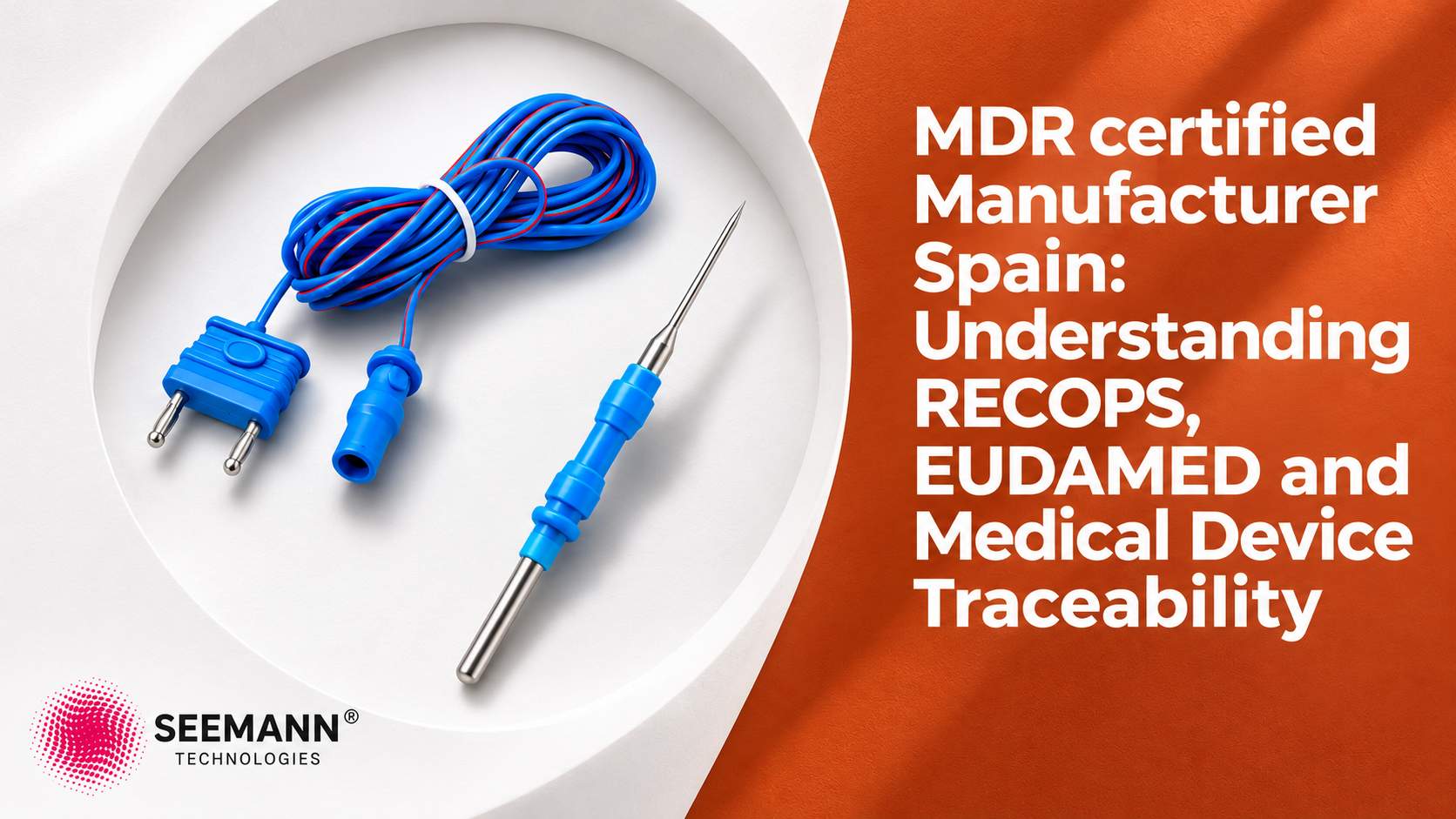
Seemann Technologies is a European medical device manufacturer offering single-use HF and MIS instruments. Its published portfolio includes bipolar forceps, monopolar electrodes and minimally invasive surgical instruments.
These product categories serve different surgical requirements. Buyers should evaluate specifications, intended applications and compatibility before selecting individual products.
Spanish hospitals and distributors seeking an MDR certified Manufacturer Spain should assess the relevant product documentation alongside supplier information.
Medical distributors and procurement teams can prepare enquiries with product references, quantities and technical requirements.
This information helps clarify specifications, documentation and commercial arrangements. It also supports more productive discussions between suppliers and purchasing teams.
RECOPS is AEMPS's electronic register for economic operators commercialising relevant medical devices and in-vitro diagnostic devices in Spain. It records operators and their commercialised products.
No. EUDAMED provides European-level medical device registration. RECOPS records relevant national commercialisation information in Spain. Both systems have separate responsibilities.
Economic operators commercialising non-custom-made medical devices and in-vitro diagnostic devices in Spain fall within RECOPS requirements. Their applicable registration and communication duties depend on their activities.
Relevant information includes the product UDI-DI, commercialisation start date, labelling and instructions for use. The product must first be notified and visible in EUDAMED.
Supplying medical devices in Spain requires attention to both European and national requirements. Understanding RECOPS, EUDAMED and UDI helps businesses maintain accurate product information.
Seemann Technologies serves European healthcare markets with specialist single-use HF and MIS instruments. Spanish hospitals and distributors can contact the company to discuss product specifications, documentation and supply requirements.

Social Media Marketing Strategies for Beginners
Mar 14 2023





(0) Comments