
No More Mistakes with Flour Mill Machine Manufacturer
Mar 11 2023

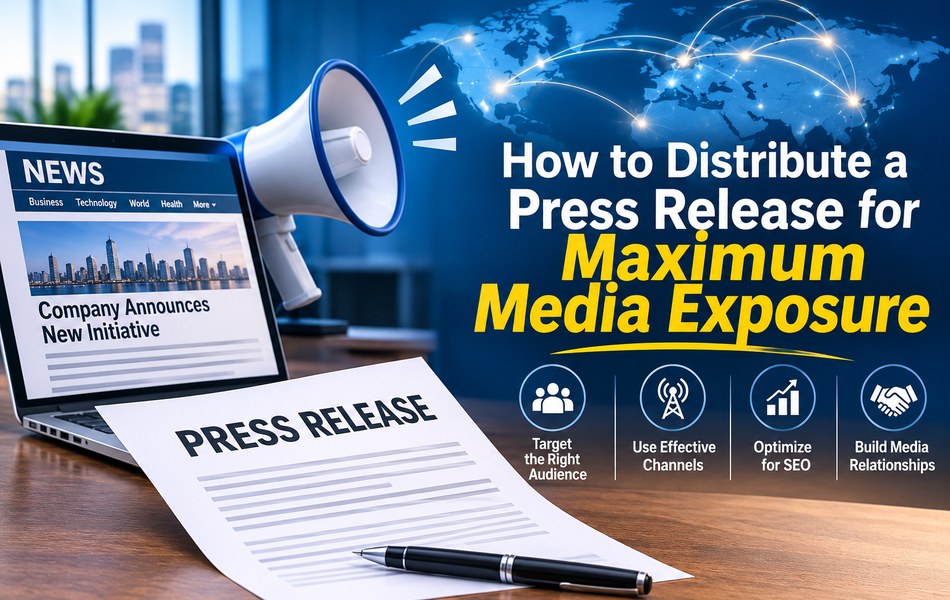
Getting a press release distribution published is only one part of a successful public relations strategy. The real challenge is making sure the announcement reaches the right journalists, media organizations, industry professionals, and potential customers. Even a well-written press release may receive limited attention if it is distributed through unsuitable channels or sent to the wrong audience.
For businesses operating in the United States, effective press release distribution can support brand awareness, strengthen media relationships, improve online visibility, and help communicate important company developments. However, achieving these results requires more than sending the same announcement to hundreds of media contacts. It involves understanding the target audience, choosing appropriate distribution channels, preparing media-friendly content, and measuring performance.
A well-planned distribution strategy helps organizations make better use of their communication efforts while increasing the likelihood of receiving meaningful media attention.
Before distributing a press release, businesses should clearly identify what they want to communicate and why the announcement matters. Every press release should have a specific purpose rather than simply promoting a company or repeating information already available on its website.
Common reasons for distributing press releases include:
Announcing new products or services.
Sharing company expansions and business developments.
Communicating leadership appointments.
Publishing research findings or industry reports.
Announcing partnerships and collaborations.
Sharing event information and important milestones.
Responding to significant industry developments.
Understanding the purpose helps determine which journalists, publications, and audiences are most relevant.
For example, a technology company introducing a new software platform may benefit from reaching technology journalists, SaaS publications, and business reporters. In comparison, a healthcare organization announcing a new research initiative may need to prioritize healthcare publications and specialized medical media.
A clear objective also makes it easier to evaluate whether distribution efforts have achieved their intended results.
One of the most important elements of successful press release distribution is audience selection. A press release may contain valuable information, but its impact can be limited when it reaches people who have little interest in the subject.
Businesses should identify the audiences most likely to find their announcement relevant. These may include journalists, editors, industry analysts, investors, customers, business partners, or members of a particular community.
Audience research should consider several factors:
Industry relevance: Identify publications and journalists who regularly cover the subject of your announcement.
Geographic location: Consider whether the news is relevant to a national, regional, or local audience.
Professional interests: Understand the topics and developments that your intended readers follow.
Publication type: Decide whether the announcement is better suited to business newspapers, trade publications, digital magazines, or specialized news websites.
For companies targeting the American market, regional relevance can be particularly important. A business opening a new office in Texas may receive more relevant coverage from local business publications than from unrelated national outlets.
The objective should be to prioritize audience relevance instead of focusing exclusively on the number of recipients.
Selecting suitable distribution channels is essential for maximizing media exposure. Different channels provide different opportunities, and businesses should understand their strengths before choosing where to publish an announcement.
Newswire services allow organizations to distribute announcements through established networks. Depending on the provider and selected package, these services may offer access to newsrooms, journalists, industry publications, and online news platforms.
They can be particularly useful for companies seeking broader geographic coverage or distributing announcements that have national business relevance.
Before selecting a provider, businesses should evaluate its distribution network, industry targeting options, geographic coverage, reporting features, and publication policies.
It is also important to understand that distribution does not guarantee editorial coverage. A press release appearing on a distribution network is different from an independent journalist choosing to write a news article about the announcement.
Direct journalist outreach involves identifying relevant reporters and editors and sending them personalized announcements.
This approach can be effective when the news has a clear connection to a journalist's previous reporting or publication's editorial focus.
Instead of sending identical messages to large contact lists, organizations should research journalists and explain why the announcement may interest their audiences.
Personalized outreach also helps businesses develop professional media relationships that may become valuable for future announcements.
A company newsroom is a dedicated section of its website where visitors can find official announcements, media resources, company updates, and contact information.
Maintaining an accessible newsroom gives journalists a reliable place to verify information and obtain supporting materials.
A useful newsroom may include:
Recent press releases.
Company background information.
Executive biographies.
High-resolution brand images.
Product information.
Media contact details.
Publishing announcements on an official newsroom also creates a permanent reference point for company communications.
Specialized publications often attract readers who are particularly interested in a specific industry.
For example, a financial technology announcement may be more relevant to fintech publications than general entertainment websites.
Businesses should research trade media that cover their industry and review each publication's editorial guidelines before submitting content.
Combining specialized publications with broader distribution channels can help organizations reach both industry professionals and general business audiences.
The quality of the press release directly influences whether journalists consider it worth reviewing. Distribution can increase the announcement's reach, but the content must provide a clear reason for media attention.
A professional press release should communicate the most important information quickly and accurately.
The headline should explain the main announcement in a straightforward way. Avoid exaggerated claims, unnecessary promotional language, and vague expressions.
A useful headline should:
Clearly identify the main development.
Include relevant keywords naturally.
Communicate the announcement's significance.
Remain concise and easy to understand.
For example, a headline announcing a company's expansion should identify the organization and the market or location involved.
The opening paragraph should answer the basic questions: who, what, when, where, why, and how.
Journalists often review multiple announcements within a limited period. Providing the most important details immediately makes the content easier to evaluate.
The body should explain the announcement with relevant facts, figures, background information, and supporting context.
When appropriate, include a statement from a company representative or subject-matter expert. Quotes should contribute meaningful insight rather than simply repeat the headline.
Accuracy is essential for establishing credibility. Verify names, dates, statistics, product details, and company information before distribution.
Avoid unsupported claims and ensure that any research findings or industry statistics come from identifiable and trustworthy sources.
Every press release should provide a reliable way for journalists to request additional information.
Include the appropriate media contact's name, professional email address, company website, and other relevant contact details.
Search engine optimization can help improve the discoverability of online press releases. However, SEO should support the announcement rather than turn it into an advertisement filled with repetitive keywords.
Businesses should begin by identifying search terms related to their announcement, industry, product, or location.
For example, a company announcing a new logistics facility may naturally use terms connected to supply chain operations, warehouse expansion, and the relevant geographic market.
Some useful optimization practices include:
Writing descriptive and relevant headlines.
Using primary keywords naturally.
Creating informative subheadings.
Adding descriptive links to relevant company resources.
Including accurate company information.
Using meaningful image descriptions.
Avoiding excessive keyword repetition.
Contextual links should provide genuine value to readers. A link to an official company announcement, research report, or relevant industry resource can help readers explore additional information.
For businesses researching distribution options, resources from vertex news wire can provide another reference point when evaluating the role of press release distribution in broader communication strategies.
Organizations should also remember that backlinks from press releases do not automatically improve search rankings. Search engines may treat links in distributed content differently depending on their attributes and placement.
The primary objective should remain useful information and genuine audience engagement.
Developing professional relationships with journalists can improve the quality of a company's media outreach over time.
Journalists receive announcements from many organizations, so businesses should demonstrate that they understand the publication's audience and editorial priorities.
Start by researching reporters who cover relevant topics. Review their recent articles, identify recurring subjects, and understand the types of announcements they are likely to consider.
When contacting a journalist:
Use a relevant and specific email subject line.
Address the journalist professionally.
Introduce the announcement in a few sentences.
Explain why the information may interest their readers.
Provide a link to the complete press release.
Offer additional information or interviews when appropriate.
Follow-up communication should be reasonable and respectful. Sending repeated messages within a short period can damage professional relationships.
Businesses should also respect editorial independence. Journalists decide whether an announcement meets their publication's standards, and media coverage should never be assumed or guaranteed.
Timing can influence how much attention an announcement receives. A relevant press release distributed during a busy news period may compete with several other developments.
Businesses should consider their announcement's urgency, audience availability, industry events, and broader news environment.
For many business announcements, weekday mornings can be a practical starting point for distribution. However, there is no universal publishing time that guarantees better results.
Consider these timing factors:
Industry activity: Avoid unnecessary competition with major industry conferences or significant scheduled announcements when possible.
News relevance: Distribute time-sensitive information while it remains useful and accurate.
Audience location: Consider the time zones of journalists and publications receiving the announcement.
Editorial schedules: Research publication deadlines and submission requirements before sending materials.
Seasonal relevance: Some announcements are more useful when distributed ahead of seasonal events, product launches, or industry milestones.
Businesses should test different distribution schedules and compare their results instead of relying on general assumptions.
Supporting visuals can make a press release easier to understand and more useful to journalists.
A relevant photograph, infographic, product image, or short video can provide additional context and help publications develop their coverage.
For example, a company announcing a manufacturing expansion may provide facility photographs, while a technology business introducing a new platform may include product screenshots or a demonstration video.
When preparing multimedia materials, businesses should:
Use high-resolution images.
Provide descriptive file names.
Include accurate image captions.
Confirm image ownership and usage permissions.
Avoid irrelevant stock photography.
Provide accessible links to downloadable media assets.
Visual materials should support the announcement rather than distract from its main message.
A well-organized media kit can also save journalists time by placing important company information and approved assets in one accessible location.
Businesses operating across multiple locations should avoid assuming that one general announcement will be equally relevant to every audience.
Regional targeting can make press release distribution more effective by connecting company developments with local interests.
For example, a national retail company opening stores in several American cities may prepare localized announcements highlighting the specific locations, employment opportunities, and community impact.
Similarly, a business entering a new regional market may need to explain how the development affects local customers and industry conditions.
Companies can improve regional relevance by considering:
Local media organizations.
Regional business publications.
State and city-level news websites.
Local industry associations.
Community-focused publications.
Regional business events.
Localization should involve meaningful differences in information, not simply replacing one city name with another.
Measuring results is necessary to understand whether a press release distribution campaign has achieved its objectives.
However, businesses should look beyond the number of websites displaying an announcement. Distribution volume alone does not demonstrate meaningful media exposure.
Organizations should evaluate several performance indicators.
| Performance Metric | What It Measures |
|---|---|
| Media placements | Publications that feature the announcement |
| Referral traffic | Website visitors arriving from external links |
| Audience reach | Estimated potential audience exposed to the content |
| Journalist engagement | Responses and inquiries from media contacts |
| Social engagement | Shares, comments, and interactions |
| Website activity | Changes in visits and relevant page engagement |
| Lead inquiries | Relevant business inquiries associated with the campaign |
Businesses can use website analytics platforms to monitor referral traffic and understand how visitors interact with their content.
Media monitoring tools can also help identify published coverage, brand mentions, and conversations related to the announcement.
It is important to distinguish between potential audience reach, actual readership, and direct engagement. These measurements represent different levels of exposure and should not be treated as interchangeable.
Reviewing results over time can help organizations identify which publications, topics, and distribution methods produce the most relevant outcomes.
Even well-established businesses can reduce their media exposure through avoidable distribution mistakes.
Some common problems include:
Sending announcements to irrelevant contacts: Large mailing lists are not necessarily effective. Focus on journalists and publications that cover the subject.
Using overly promotional language: A press release should communicate newsworthy information rather than read like a product advertisement.
Ignoring editorial guidelines: Different publications have different submission requirements. Review them before sending content.
Distributing inaccurate information: Incorrect statistics, outdated details, and unsupported statements can damage credibility.
Overusing keywords and links: Excessive optimization can make announcements difficult to read and reduce their informational value.
Ignoring performance data: Without reviewing campaign results, businesses may continue using ineffective distribution methods.
Expecting guaranteed coverage: Distribution services provide access to networks, but editorial decisions remain with individual publishers and journalists.
Avoiding these mistakes helps businesses maintain professional communication standards and make more informed distribution decisions.
Maximum media exposure is not necessarily achieved through a single announcement. Consistency, relevance, and preparation are important parts of a sustainable media communication strategy.
Businesses should establish a process that connects news development, content preparation, distribution, and performance evaluation.
A practical approach includes:
Identify a genuinely newsworthy development.
Define the intended audience and communication objectives.
Research suitable publications and journalists.
Prepare an accurate, informative press release.
Select appropriate distribution channels.
Coordinate publication timing and media outreach.
Monitor coverage and audience engagement.
Evaluate the results and improve future campaigns.
Maintaining a calendar of company announcements can also help communication teams plan their activities more effectively.
However, businesses should prioritize meaningful developments instead of publishing announcements simply to maintain a frequent publishing schedule.
A thoughtful approach allows organizations to build credibility while keeping their communications relevant to journalists and readers.
Distributing a press release for maximum media exposure requires careful planning, relevant targeting, professional writing, and continuous performance evaluation. Businesses should understand their audiences, select suitable distribution channels, build relationships with journalists, and provide accurate information that offers genuine news value.
For companies targeting the United States, combining national distribution with regional media outreach and industry-specific publications can create opportunities to reach different segments of the market.
Equally important is understanding that successful distribution does not depend entirely on how many outlets receive an announcement. The relevance of those outlets, the quality of the information, and the level of genuine audience engagement are more meaningful indicators of communication effectiveness.
By following a consistent and research-driven distribution strategy, businesses can strengthen their media presence, improve brand visibility, and establish more effective relationships with the audiences that matter to their long-term growth.
Social Media Marketing Strategies for Beginners
Mar 14 2023




(0) Comments