No More Mistakes with Flour Mill Machine Manufacturer
Mar 11 2023
1.png)
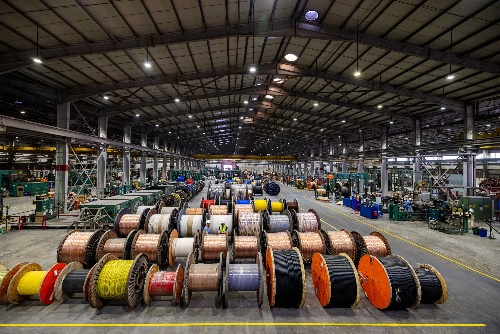
In the intricate design of any modern building, tunnel, or industrial facility, cables are a fundamental, yet often overlooked, component of fire safety. In the event of a fire, the way a cable behaves can have profound consequences: it can either contribute to the spread of fire, produce dense, toxic smoke that hinders escape, or, in the case of critical circuits, continue to function long enough for people to safely evacuate. This is why fire performance testing is not just a regulatory requirement for cable manufacturers; it's a critical process for ensuring public safety in high-risk zones.
When a fire breaks out, cables can present three major hazards if they are not designed and tested for fire performance:
Flame Spread: Cables can act as a wick, spreading fire from one area to another.
Smoke & Gas Emission: The plastics used in cable insulation can burn, releasing thick, opaque smoke (which is the leading cause of death in building fires, not the flames themselves) and toxic, corrosive gases.
Circuit Failure: A fire can cause a cable to fail, cutting power to critical life-safety systems like emergency lighting, fire alarms, or sprinkler pumps.
Fire performance testing is designed to quantify and mitigate these exact risks.
Fire performance is not a single characteristic; it's a hierarchy of properties, each measured by a different test, with increasing levels of performance and cost.
The Test: This is the most basic test, often involving a single vertical flame applied to a cable or a bunch of cables for a short period (e.g., IEC 60332-1, -3). The test measures whether the flame self-extinguishes or continues to spread along the cable.
What it means: A "flame-retardant" cable has passed this test. It will resist ignition and, if ignited, will not spread the fire, which is a significant safety improvement over a standard, flammable cable.
The Test: The cable is burned inside an enclosed chamber, and the amount and density of the smoke are measured (e.g., IEC 61034).
What it means: A "low smoke" cable has passed this test. It produces significantly less dense and opaque smoke than traditional cables (e.g., PVC cables), improving visibility for occupants trying to evacuate and for firefighters entering a building.
The Test: This test analyzes the gases released when a cable burns (e.g., IEC 60754). It measures the concentration of corrosive and toxic halogen gases.
What it means: A "zero halogen" cable has passed this test. It confirms that the cable does not release harmful halogen acid gases (like hydrogen chloride) when burning, which are dangerous to breathe and corrosive to sensitive electronic equipment (e.g., fire alarms, servers, control systems).
LSZH (Low Smoke, Zero Halogen): A cable designated LSZH has passed all three of the above tests (flame propagation, low smoke, zero halogen). This is the standard for public and high-risk areas.
The Test: This is the ultimate test for fire performance (e.g., BS 8491, IEC 60331). The cable is subjected to a direct fire (often at 750°C or 950°C), mechanical shock (water spray and impacts), and continuous voltage for a specified period (e.g., 90 or 120 minutes). The test measures whether the cable can continue to function electrically throughout this ordeal.
What it means: A "fire survival" or "fire-resistant" cable has passed this test. It's designed to maintain circuit integrity during a fire, which is critical for life-safety systems like:
Emergency lighting and signage.
Fire alarm and detection systems.
Smoke extraction fans and sprinkler systems.
Evacuation lifts and voice communication systems.
Achieving these standards requires more than just good intentions. It demands:
Specialized Materials: High-performance polymers, mineral fillers, and fire-resistant materials (like mica tape) are used to meet the demanding test criteria.
Dedicated R&D: Manufacturers, like leading cable manufacturers in uae, invest in R&D to develop advanced LSZH and fire survival compounds that meet these standards without compromising other properties like flexibility and durability.
Rigorous In-House Testing: Having accredited in-house laboratories that can perform these complex tests (e.g., smoke density chambers, fire resistance furnaces) is a hallmark of a quality-focused manufacturer.
Third-Party Certification: Having these tests independently verified and certified by global bodies (like BASEC, VDE, or UL) provides customers with undeniable proof of a cable's performance.
The materials from a manufacturer's supply chain, such as those from quality cable suppliers in uae, are also critical for passing these tests.
In high-risk environments, a cable's fire performance is a matter of life and death.
Hospitals: Fire survival cables are essential to keep fire alarm systems, emergency lighting, and critical life-support systems running.
Tunnels & Subways: Tunnels are enclosed spaces with limited escape routes. LSZH cables are critical for keeping escape routes clear and protecting signaling/communication systems.
Airports: For fire alarms, emergency lighting, and public address systems that guide evacuations in vast, crowded terminals.
High-Rise Buildings: In tall buildings, firefighters rely on fire-resistant cables to power lifts and pumps. LSZH cables are crucial for ensuring visibility in stairwells.
Fire performance testing is the rigorous, scientific process that underpins the safety of our public and private spaces. By moving beyond basic flame retardancy to a comprehensive evaluation of a cable's behavior in a fire – its smoke density, gas emission, and ability to maintain circuit integrity – the cable industry provides the crucial links for life-safety systems. Investing in and specifying high-performance, certified cables for high-risk zones is not just an engineering best practice; it's a fundamental commitment to the safety of everyone who works in or uses those spaces.
What's the main difference between a flame-retardant cable and a fire-resistant cable?
A flame-retardant cable will resist ignition and, if ignited, will not spread the flame. A fire-resistant (or fire survival) cable is specifically designed to maintain circuit integrity and continue to function for a specified time (e.g., 90 or 120 minutes) during and after a direct fire, which is required for life-safety systems.
Why is the smoke density test so important?
Dense smoke is the leading cause of death in building fires, not the flames. A smoke density test measures how much a cable will obscure visibility when it burns. A cable that passes this test (like an LSZH cable) produces significantly less opaque smoke, which is crucial for safe evacuation and for firefighters to navigate a building.
What are the corrosive gases that are a concern in a cable fire?
When traditional PVC cables burn, they release hydrogen chloride (HCl) gas. This gas is highly toxic to breathe and, when it mixes with water vapor (from a sprinkler system or the air), it forms hydrochloric acid, which can corrode sensitive electronic equipment and steel structures, causing damage long after the fire is out.
Are LSZH cables mandatory everywhere?
No, not for all applications. However, they are increasingly mandated by building codes and safety regulations in many countries for use in high-risk zones and public spaces like hospitals, airports, tunnels, and high-rise buildings where their superior fire performance is critical for public safety.
What is a "fire survival" test and what happens during it?
A fire survival test is a rigorous test for fire-resistant cables. The cable is placed in a furnace and subjected to direct flames at a very high temperature (e.g., 950°C). While burning, it is also exposed to mechanical shock (simulating falling debris) and/or water spray. The test is considered a pass if the cable continues to maintain its electrical circuit integrity throughout the specified test duration.

Social Media Marketing Strategies for Beginners
Mar 14 2023

_(1)_(2).png)
.jpg)

(0) Comments