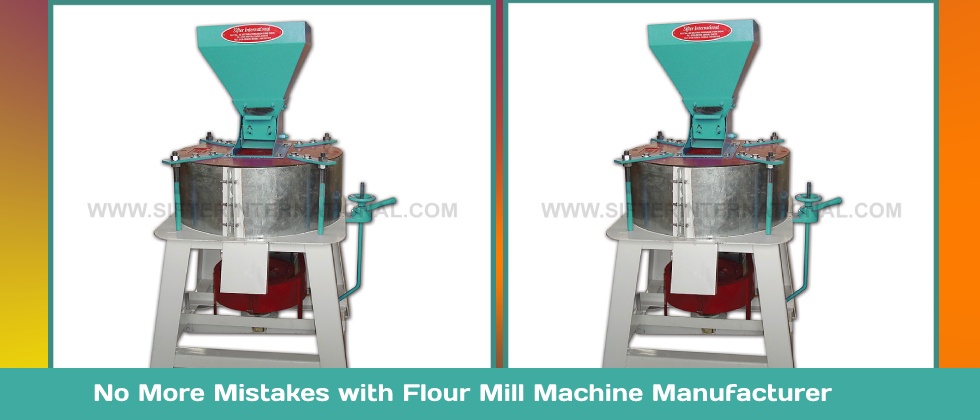
No More Mistakes with Flour Mill Machine Manufacturer
Mar 11 2023
1.png)

Cheques are one of the most commonly used modes of payment in India. They offer a secure, trackable, and legally recognized method of transferring money between individuals and businesses. However, when a cheque is dishonored or "bounces," it can lead to significant financial and legal consequences. In India, a cheque bounce is not merely a financial issue—it is a criminal offence under the Negotiable Instruments Act, 1881.
One of the most important steps in dealing with a dishonored cheque is issuing a Cheque Bounce Notice. This article explains everything you need to know about cheque bounce notices—its format, legal significance, process, timelines, and remedies available to the aggrieved party.
A cheque bounce occurs when the bank refuses to honour a cheque upon presentation for various reasons, most commonly due to insufficient funds, signature mismatch, or account closure. When this happens, the bank returns the cheque to the payee (the person presenting the cheque) along with a “cheque return memo” stating the reason for non-payment.
Insufficient balance in the drawer’s account
Account closed or inactive
Signature mismatch
Date issues (e.g., stale or post-dated cheque)
Alteration in cheque details
Mismatch in the amount written in words and numbers
The legal remedy for a cheque bounce is governed under Section 138 of the Negotiable Instruments Act, 1881. It states that bouncing of a cheque for insufficiency of funds is a punishable offence with:
Imprisonment up to two years, or
Fine up to twice the cheque amount, or
Both
However, before proceeding legally, the aggrieved party is required to serve a legal notice (cheque bounce notice) to the drawer of the cheque.
A cheque bounce notice is a legal document sent by the payee (person to whom money is owed) to the drawer (person who issued the cheque) demanding payment of the dishonoured amount.
This notice is mandatory under Section 138 of the NI Act. Without issuing this notice, the payee cannot proceed with a legal complaint in court.
The cheque bounce notice serves several legal and practical purposes:
Official Communication: It informs the drawer of the dishonour and gives them a chance to make the payment.
Legal Requirement: It is a pre-condition to filing a criminal complaint under Section 138.
Evidence: It serves as proof that the payee gave the drawer an opportunity to rectify the default.
Out-of-court settlement: In many cases, the drawer settles the matter after receiving the notice, avoiding litigation.
A valid and legally compliant cheque bounce notice must include the following:
Name and address of the drawer
Details of the dishonoured cheque:
Cheque number
Date of issue
Bank name and branch
Amount
Date of cheque dishonour and reason (as per the return memo)
A demand for payment within 15 days of receipt of notice
Statement that legal action will be taken if payment is not made
Cheque Dishonour:
The cheque is returned unpaid by the bank.
A return memo is issued by the bank specifying the reason.
Issuing the Legal Notice:
The payee must send a cheque bounce notice to the drawer within 30 days of receiving the bank memo.
15-Day Waiting Period:
After the notice is received, the drawer is given 15 days to make the payment.
If payment is made within 15 days, the matter ends there.
Filing the Complaint:
If the drawer fails to pay within 15 days, the payee can file a criminal complaint under Section 138 within the next 30 days.
30 days: Time to issue notice after cheque bounce
15 days: Time given to drawer to pay after receiving notice
30 days: Time to file complaint after expiry of 15-day period
A cheque bounce notice should be sent through registered post with acknowledgment due (RPAD), or via courier or email (with proof). Physical delivery is still preferred in legal procedures as it provides better documentary evidence.
If the drawer does not make payment even after 15 days of receiving the notice, the payee has the right to file a criminal complaint under Section 138 of the Negotiable Instruments Act in a magistrate’s court.
The complaint should be filed in the court that has jurisdiction over the bank branch where the payee presented the cheque.
Copy of the bounced cheque
Bank return memo
Copy of the legal notice and proof of delivery
Any agreement or invoice (if applicable)
Under Section 138, the following penalties can be imposed:
Imprisonment up to two years
Fine up to double the cheque amount
Both imprisonment and fine
Additionally, the court can order compensation under Section 357 of CrPC.
In addition to a criminal complaint, the payee may also file a civil suit to recover the cheque amount with interest and legal expenses. This may include:
Summary suit under Order XXXVII of CPC
Money recovery suit (if summary remedy is not available)
Cheque bounce cases are very common in commercial dealings, particularly with:
Loan repayments
Rent payments
Vendor/supplier dues
Salary/wages
Businesses often include penalty clauses in agreements for cheque dishonour, and legal notices serve as the first step in recovering dues.
Maintain sufficient funds
Avoid issuing post-dated cheques without adequate balance
Use correct signature and avoid overwriting
Maintain updated bank account details
Present the cheque within its validity (usually 3 months)
Maintain records of transaction and cheque
Promptly issue notice upon bounce
The government has introduced several reforms to reduce the burden of cheque bounce cases on the judiciary. Courts have also emphasized that Section 138 is a criminal offence, and repeated defaults can lead to harsher penalties.
The Supreme Court has recommended a mediation mechanism before proceeding to trial to encourage early resolution.
A cheque bounce is not just a financial inconvenience but a serious legal offence in India. The cheque bounce notice acts as the first step in the legal process, giving the drawer a fair opportunity to make good on their commitment.
Understanding the correct format, timelines, and legal process helps individuals and businesses protect their rights and recover dues efficiently. With timely legal advice and proper documentation, a cheque bounce case can be resolved with speed and success.
If you're facing a cheque dishonour situation, consulting an experienced lawyer or legal platform like Insaaf99 can help you navigate the legal procedure smoothly and assert your rights with confidence.

Social Media Marketing Strategies for Beginners
Mar 14 2023

_(1)_(2).png)

.jpg)

(0) Comments