
No More Mistakes with Flour Mill Machine Manufacturer
Mar 11 2023

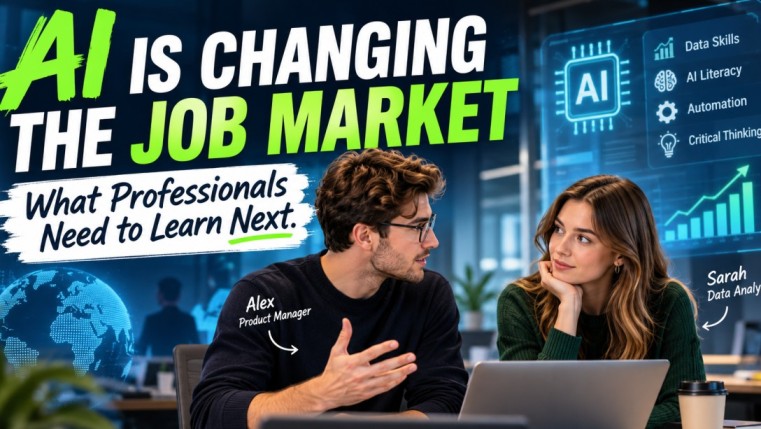
The way companies build products, analyze data, and make business decisions is changing faster than many professionals expected. Artificial intelligence is no longer something reserved for research labs or technology companies. It is becoming part of everyday business operations, from understanding customer behavior to predicting market demand and improving product performance.
For professionals working in Product Management and Data Analytics, this shift is particularly significant. Both fields have traditionally relied on a combination of technical knowledge, business understanding, and problem-solving. But as AI-powered tools become more capable, employers are beginning to look beyond traditional job responsibilities.
A Product Manager who once spent hours reviewing customer feedback, preparing product requirement documents, and coordinating development priorities can now use AI to accelerate much of that work. Similarly, a Data Analyst who previously spent considerable time cleaning datasets, writing queries, and preparing reports can use AI-assisted analytics to uncover patterns and generate insights faster.
The technology is changing how the work gets done. More importantly, it is changing what companies expect from the people doing it.
For professionals in these fields, the question is no longer whether AI will influence their careers. It is whether they are developing the skills needed to grow alongside it.
Product Management has always required professionals to balance customer expectations, business priorities, and technical possibilities. A Product Manager is responsible for understanding market needs, defining product strategy, managing roadmaps, prioritizing features, and working with engineering, design, and marketing teams.
However, AI is changing the traditional product management workflow.
Tasks such as market research, customer feedback analysis, competitor research, user story creation, and product documentation can now be accelerated with generative AI tools. Platforms such as ChatGPT and Claude can help Product Managers summarize customer interviews, identify recurring product issues, draft PRDs, and organize feature requirements.
Consider a company preparing to launch a new subscription-based application. The product team might have thousands of customer reviews, support tickets, survey responses, and competitor insights to analyze. Traditionally, reviewing this information could take several days.
With AI-powered product management tools, a Product Manager can organize customer feedback, identify recurring complaints, generate potential feature ideas, and prepare an initial product requirements document in significantly less time.
But faster documentation does not automatically translate into better product decisions.
The Product Manager still needs to determine which customer problems deserve attention, which features align with the company's business strategy, and how product success should be measured.
This is why AI Product Management is becoming an important area of professional development. Companies need Product Managers who understand both traditional product management principles and emerging AI capabilities.
Skills Product Managers should focus on:
AI-powered product management and generative AI workflows.
Product strategy, roadmap planning, and feature prioritization.
Customer research and AI-assisted feedback analysis.
Product analytics, user engagement, and retention metrics.
Large language models (LLMs), APIs, and AI product integration.
Writing product requirements documents (PRDs) and defining success metrics.
The biggest opportunity is for Product Managers who can move beyond managing tasks and contribute to building smarter, more useful products.
Data Analytics is experiencing a similar transformation.
For years, organizations have relied on Data Analysts to collect information, clean datasets, create reports, build dashboards, and identify business trends. Skills such as SQL, Excel, Python, Tableau, and Power BI remain essential across industries.
However, the growing adoption of artificial intelligence is expanding what companies expect from data professionals.
Businesses increasingly want analysts who can do more than explain what happened. They want professionals who can investigate why it happened, identify what might happen next, and recommend what the organization should do about it.
AI-powered data analytics makes this process more accessible and efficient.
For example, imagine an e-commerce company experiencing a sudden decline in repeat purchases. A traditional analytics workflow might involve extracting customer data using SQL, preparing reports in Power BI, and manually comparing purchasing patterns.
With AI-assisted analytics, an analyst can use tools such as ChatGPT or Claude to explore datasets, generate Python code, investigate unusual patterns, and accelerate the analysis process.
Machine learning and predictive analytics can take this further by helping businesses forecast customer churn, estimate future sales, identify purchasing patterns, and understand customer behavior.
This doesn't mean traditional data analytics skills are becoming irrelevant. SQL, Python, data visualization, and statistical knowledge remain the foundation of reliable analysis.
What is changing is the level of insight expected from analysts.
A professional who can combine technical analytics skills with AI-assisted analysis and business intelligence is better equipped to contribute to strategic business decisions.
Skills Data Analysts should focus on:
Advanced SQL and Python for data analysis.
Power BI and Tableau for business intelligence.
AI-assisted data analysis using ChatGPT and Claude.
Predictive analytics and machine learning fundamentals.
Data visualization and business reporting.
Statistical analysis and data interpretation.
Data storytelling and business decision-making.
The next stage of data analytics is not simply about producing more dashboards. It is about turning data into decisions that improve business performance.
The difference between traditional Product Management and AI Product Management is becoming increasingly important as organizations introduce AI-powered features into their products.
Traditional Product Management often focuses on identifying customer needs, defining requirements, prioritizing features, and coordinating product development.
AI Product Management adds another layer of complexity. Product Managers must understand how AI models work, where they can be applied, how their outputs should be evaluated, and what risks they introduce.
For example, building a traditional search feature is different from developing an AI-powered recommendation system. The latter requires an understanding of data quality, model performance, personalization, accuracy, and ongoing evaluation.
Product Managers working on AI products also need to consider issues such as hallucinations, bias, data privacy, model limitations, and user trust.
This creates opportunities for professionals who want to expand their existing product management experience into AI-focused roles.
Some emerging and related career paths include:
AI Product Manager
Technical Product Manager
Generative AI Product Manager
Product Strategy Manager
AI Solutions Product Manager
Product Operations Manager
For professionals already working in Product Management, learning AI product development can provide a pathway toward more specialized responsibilities.
Data Analysts also have an opportunity to expand their careers without abandoning their existing expertise.
A professional with experience in SQL, Python, Excel, and business intelligence already has a foundation for working with more advanced analytical systems. Adding AI and machine learning knowledge can open opportunities to work on predictive modeling, automation, customer intelligence, and advanced business analytics.
Consider a financial services company trying to identify customers who may be likely to stop using its services. A Data Analyst can use historical customer data to identify patterns associated with customer churn.
With additional knowledge of machine learning and predictive analytics, that professional can contribute to developing models that estimate churn risk and help the business identify customers who may need attention.
Similarly, retail analysts can work on demand forecasting, marketing analysts can evaluate campaign performance, and operations analysts can use AI-powered tools to identify inefficiencies.
This creates opportunities to explore career paths such as:
Senior Data Analyst
Business Intelligence Analyst
Product Data Analyst
Analytics Consultant
Predictive Analytics Specialist
Data Scientist (with additional statistical and machine learning expertise)
The important point is that career growth in data analytics does not always require starting from scratch. Building on existing analytical skills while learning AI applications can create new professional opportunities.
One of the most interesting developments is how closely Product Management and Data Analytics are becoming connected.
Modern product teams increasingly rely on data to make decisions about feature development, customer engagement, product adoption, and revenue growth.
A Product Manager may need to understand user retention data before prioritizing a new feature. A Data Analyst working with the product team may need to identify why users abandon a particular step in the application.
Both professionals are working toward the same objective: understanding customer behavior and improving business outcomes.
AI makes this collaboration even more important.
Product Managers can use AI to identify customer pain points and generate product hypotheses. Data Analysts can investigate those hypotheses using customer data, product metrics, and predictive models.
For instance, if an application experiences declining user engagement, the Product Manager may identify potential usability issues while the Data Analyst investigates session activity, retention rates, and feature adoption.
Together, they can use these findings to prioritize improvements and measure their impact.
This intersection of AI, Product Management, and Data Analytics is creating demand for professionals who understand how technology, customer behavior, and business intelligence work together.
Professionals who develop skills across these areas can bring additional value to cross-functional teams.
Learning AI does not mean collecting certifications or experimenting with every new tool that enters the market. The more practical approach is to identify how AI can improve your existing professional capabilities.
For Product Managers, this could mean developing an AI-powered product concept, researching a market opportunity, creating a product roadmap, defining user stories, and establishing measurable success criteria.
For Data Analysts, it could involve building an AI-assisted analytics project, analyzing customer churn, automating a reporting workflow, or creating a predictive sales model.
Hands-on projects help demonstrate how well someone can apply technical knowledge to real business problems.
It is also important to become familiar with tools used across modern workplaces. ChatGPT and Claude can support research, documentation, coding, and analysis. Power BI and Tableau remain useful for visualization, while Python and SQL provide the technical foundation for working with data. Understanding automation platforms and APIs can further expand the types of projects professionals can build.
The goal is not to become an expert in every technology. It is to develop a combination of skills that makes your existing expertise more valuable.
Employers are increasingly interested in professionals who can connect technology with measurable outcomes, whether that means improving product adoption, reducing customer churn, increasing operational efficiency, or supporting better business decisions.
Artificial intelligence is changing the way organizations develop products, understand customers, and use business data. Product Management and Data Analytics are two fields where this transformation is particularly visible.
For Product Managers, the opportunity lies in combining product strategy and customer understanding with AI product development capabilities.
For Data Analysts, it lies in moving beyond traditional reporting toward AI-assisted analytics, predictive modeling, and strategic business insights.
Neither career requires professionals to abandon the skills they have already developed. Instead, the next stage of career growth will increasingly depend on how effectively they combine existing expertise with emerging technologies.
The professionals who stand out will not necessarily be those who know the most AI tools. They will be those who can identify meaningful problems, use technology intelligently, interpret results, and turn insights into measurable business value.
The question isn't whether AI will change your profession. It's whether your skill set will evolve with it.

Social Media Marketing Strategies for Beginners
Mar 14 2023



(0) Comments